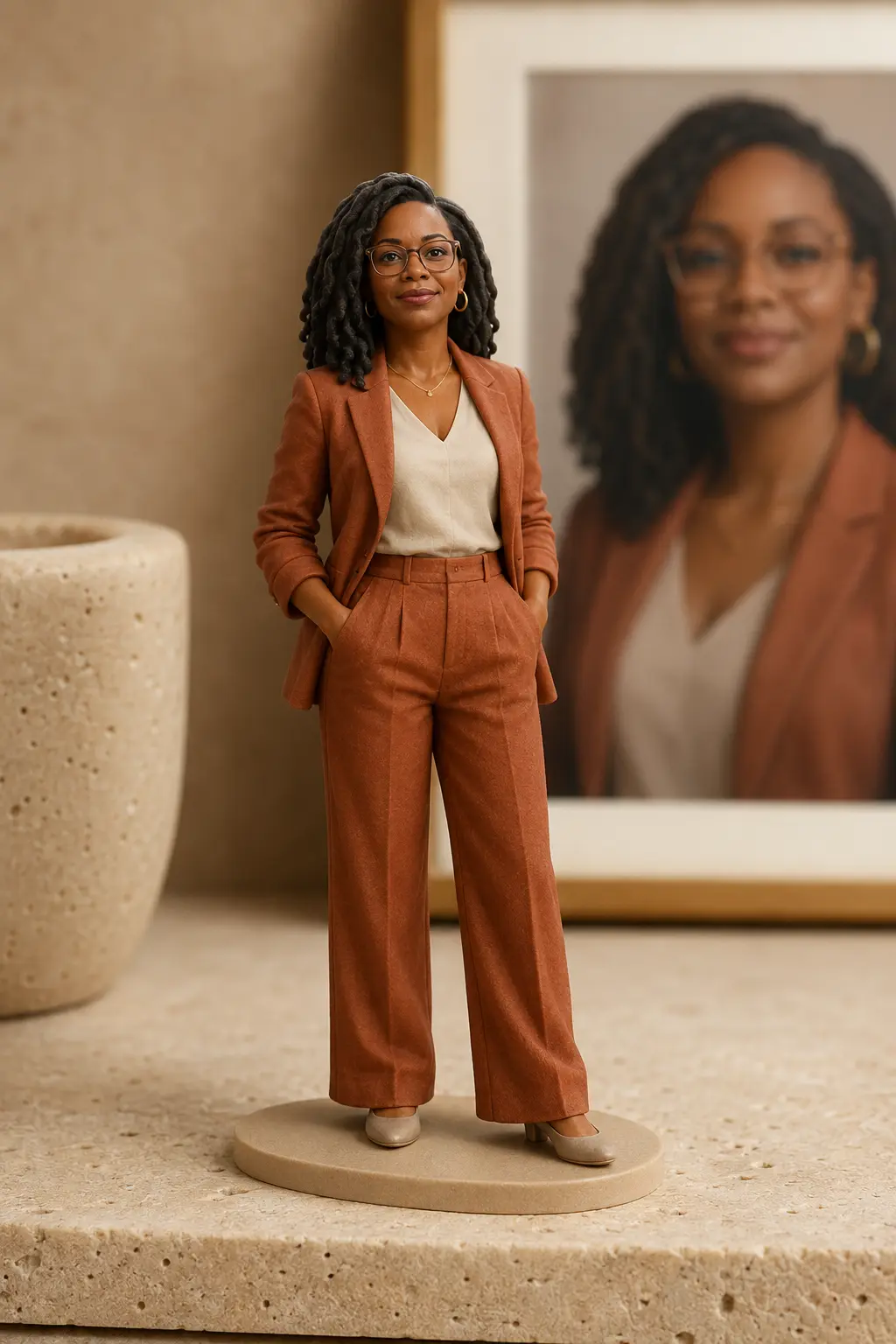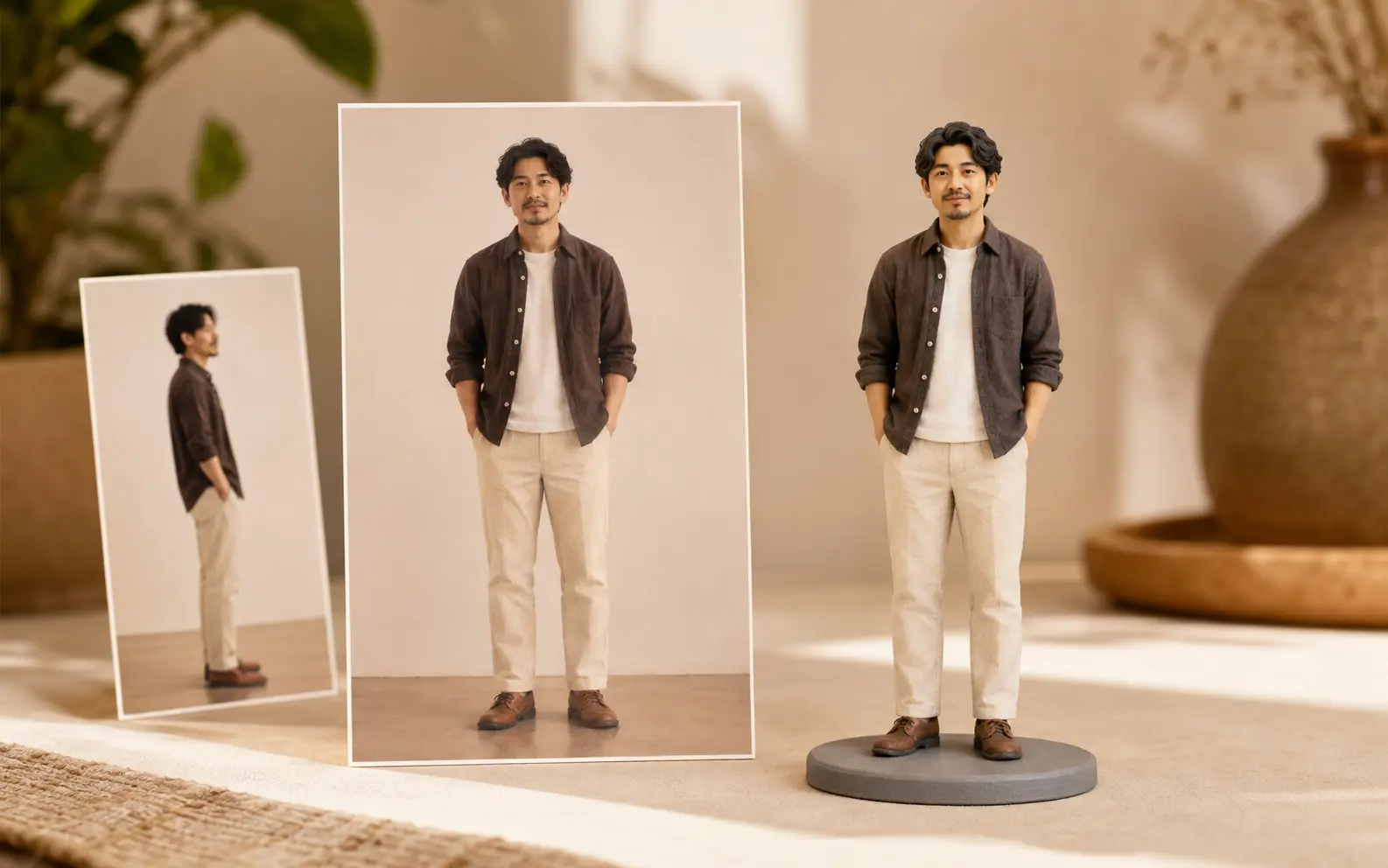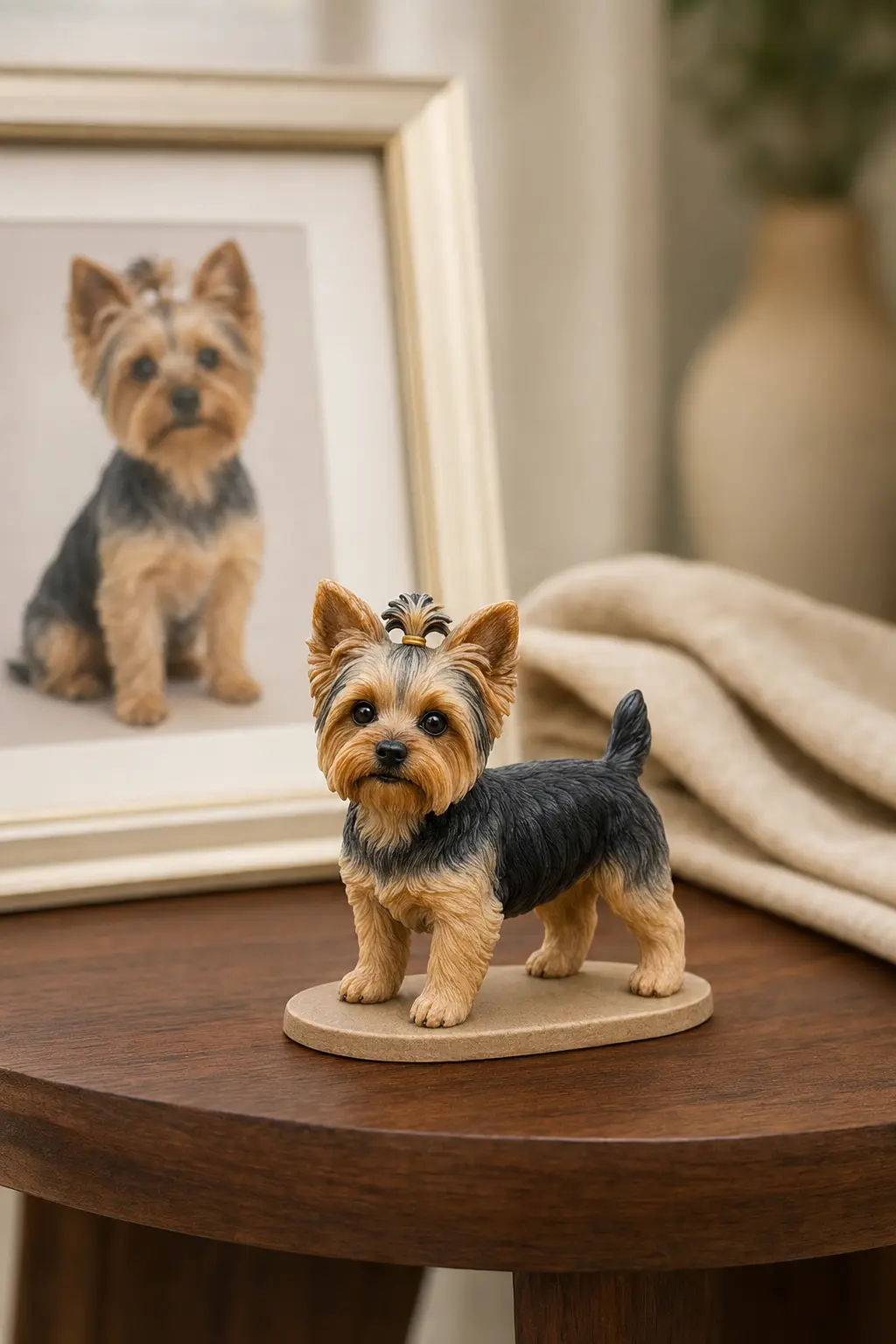
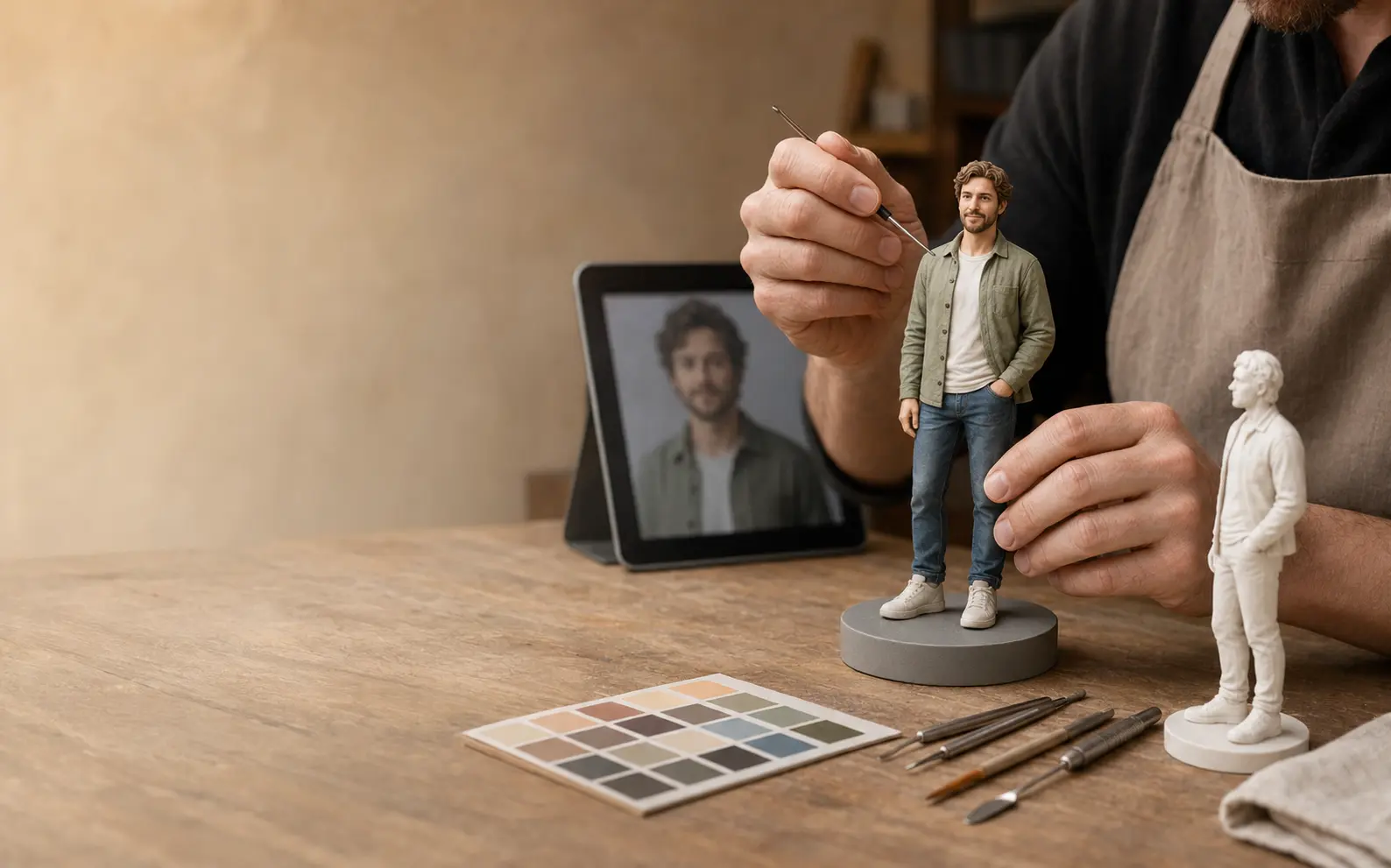
Turning a photo into a figurine is not a single conversion. The image gives us identity and direction, but the physical object still needs a back, sides, stable contact points and a structure that can survive printing, finishing and everyday display.
A camera leaves information outside the frame
One photograph cannot show the back of the hairstyle, the hidden side of a jacket or the exact space between an arm and the body. Those missing areas must be reconstructed so the model feels coherent from every angle.
This is why extra reference images can help with unusual clothing, complex accessories or pet markings—even though one clear main image remains the creative anchor.
Screen-perfect is not always print-ready
Fine hair, separated fingers, thin hems and floating accessories may look elegant in a render but become fragile in production. A print-ready model connects or thickens these details carefully while preserving the overall silhouette.
- Hair is grouped into readable, durable forms
- Fingers and small accessories receive structural support
- The stance connects securely to the selected base
- Hidden geometry is completed and checked
Human refinement protects the story
Automation can explore a visual direction quickly. Human review decides which details carry identity, which shapes need reinforcement and how the model should read as a physical keepsake rather than a digital effect.
A meaningful result begins with a clear intention.
Choose the subject, moment and recognizable details you want the physical piece to carry. InkMee can help translate that direction into a full-color figurine designed for real-world display.