Use even, natural-looking light
Choose a photo where facial features, coat markings and clothing colors remain readable without deep shadows or blown highlights.
The best photo for a custom figurine is clear, well lit and large enough to show the face or defining pet features, hairstyle, clothing, pose and important markings. Start with one main image for the composition. If more detail is needed, InkMee will ask for a close-up or side reference for hidden details. Old, black-and-white or imperfect photos may still work when the intended age and missing information are clear.
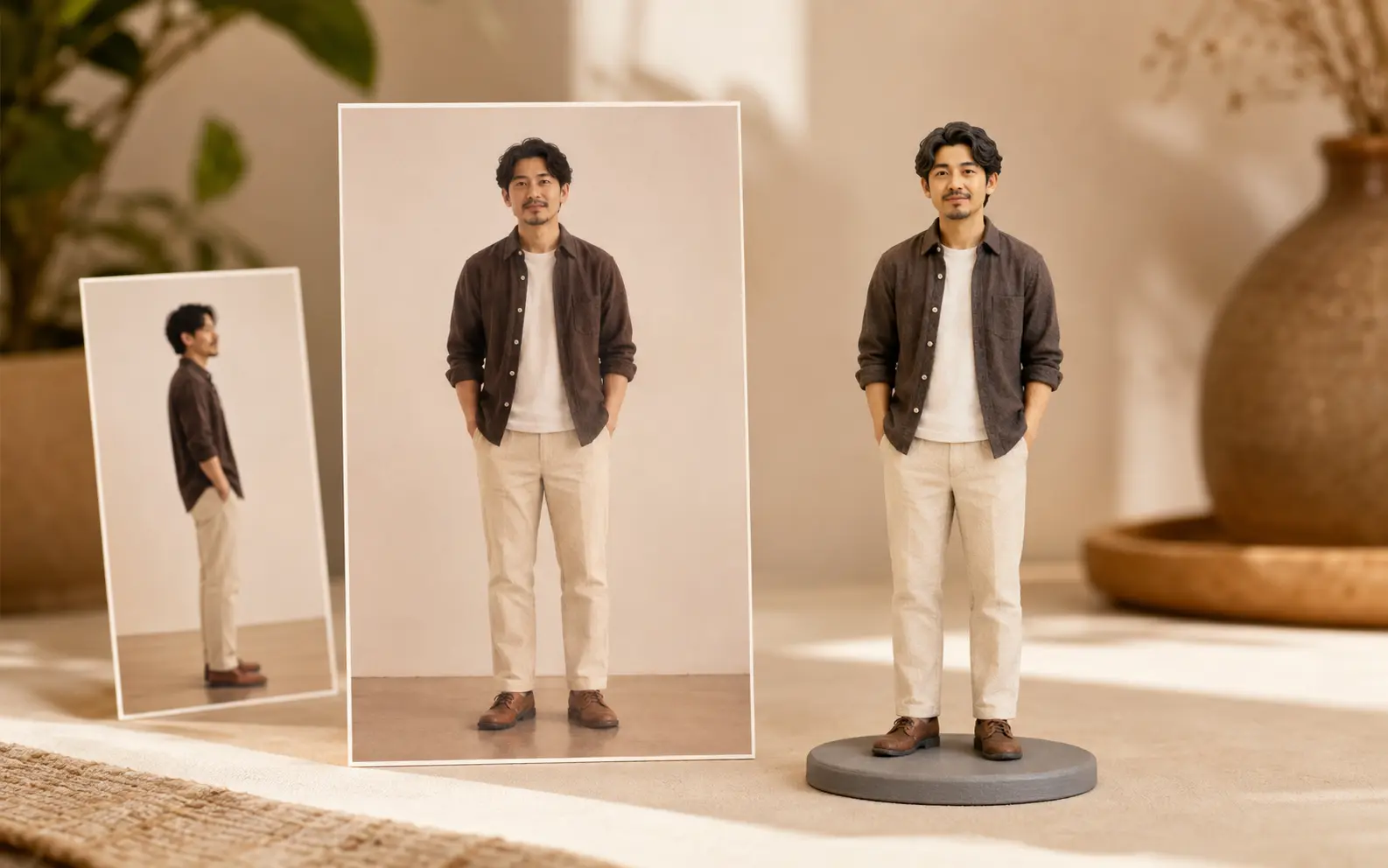 ✓ Clear light · visible outfit · useful pose
For a person, check the face, hairstyle, clothing and pose. For a pet, check the ears, body shape, coat pattern, tail and stance.
A beautiful photo is not always a useful reference. Heavy portrait blur, dramatic darkness, filters, tiny faces or large obstructions can remove the information needed to build a recognizable three-dimensional interpretation.
Choose a photo where facial features, coat markings and clothing colors remain readable without deep shadows or blown highlights.
Include the hair shape, clothing, footwear and any meaningful design cues you want considered.
Use an original or high-resolution image where the face or defining pet features are not tiny.
The main image should establish the pose, relationship, clothing and intended age or time period.
If InkMee requests another reference, a close-up, side view or back view can explain hidden details but should not conflict with the main photo.
Filters can change face shape, skin texture and color; blur can remove the details that make the subject recognizable.
Hands, phones, sunglasses, hair or darkness across the face reduce useful identity information.
If the final figurine should preserve a full-body pose, include the hands, feet and clothing silhouette where possible.
Choose an image where each face and body position can be understood separately.
Do not mix different ages, hairstyles, outfits or body directions unless you clearly identify which version should control.
A portrait prioritizes the face and style. A group needs readable spacing. A pet needs body shape and markings. A milestone often depends on clothing and accessories.
Use a chest-up or full-body photo with the face, complete hairstyle and signature clothing visible.
Glasses or jewelry can help explain identity, but thin or fragile accessories may need to be simplified, thickened, attached or removed for production.Use one image with readable spacing, faces large enough to inspect and minimal overlap.
The main photo should define relative height, shared gestures and the group composition.Photograph at eye level when possible. Show the ears, chest, paws, tail, body shape and distinctive coat markings.
A side reference can help explain breed shape or markings hidden in the main image.Show clothing from head to toe and add a closer face reference if the person is small in the main photo.
Bouquets, caps, medals and other accessories may be adapted for physical strength.Choose an image where both faces are clear and the physical relationship is easy to understand.
Avoid poses where one person hides most of the other.When InkMee requests a supporting reference, it guides interpretation and does not automatically add a separate pose, outfit or subject to the composition.
Defines the pose, composition, clothing, relationship and intended version of the person or pet.
Clarifies facial cues, hairline, expression, pet face shape or coat markings when the main subject is small.
Clarifies the back of an outfit, hairstyle shape, shoes, pet tail pattern or another feature not visible in the main image.
Often yes. What matters is whether the intended age, the defining details and the missing information are clear.
Yes, if the face, hairstyle, clothing or other defining cues are still readable. Use the old photo as the main reference when the goal is to preserve that earlier time period.
Yes. InkMee can use the composition and visible details, but color choices must come from an additional reference requested by InkMee or from reasonable interpretation. Do not expect unknown colors to be recovered from the image alone.
It may work when the silhouette, clothing and major features remain recognizable, but fine facial details cannot be recovered reliably. If InkMee requests more detail, provide a sharper face reference the way InkMee asks.
Use the young photo as the main reference when the figurine should represent the younger version. If InkMee requests more detail, a current photo may help clarify stable facial structure or side views, but it should not automatically age the subject forward.
InkMee may reasonably interpret missing areas or request another reference. If the missing detail is important, InkMee may ask for a supporting image before production.
Uploaded photos are handled under the Image Upload Policy and Privacy Policy. Use InkMee’s upload flow instead of emailing reference photos. You can generate a preview first and keep it in Your Creations; product options and pricing appear only after you choose a saved result.
Ask InkMee →Custom work feels better when the process is clear.
Visit the help center →The best main photo is clear, well lit and large enough to show the subject’s face or defining pet features, hairstyle or coat pattern, clothing, pose and other recognizable details. It should also represent the age, outfit and moment you want the final figurine to preserve.
Often yes. One strong main photo can define the composition, pose, clothing and intended version of the subject. A supporting close-up or side view may be useful when important facial, hairstyle, pet-marking or clothing details are hidden or too small to read.
Use the framing that shows the information the finished piece needs. A portrait can be strong for facial and hairstyle details, while a full-body photo is better when pose, outfit, footwear, hands and relative body position are important to the composition.
Often yes, if the intended age, hairstyle, clothing and other defining cues remain readable. When the goal is to preserve an earlier time period, the old photo should remain the main reference rather than allowing a newer photo to change the subject’s age or overall version.
Yes. A black-and-white image can provide composition, facial cues and clothing information, but it cannot reveal unknown colors. If color matters, InkMee may need another reference or must make a reasonable interpretation rather than claiming to recover colors that are not present.
It may work if the major silhouette, clothing and recognizable features remain understandable, but fine facial detail cannot be reliably recovered from information that is not visible. A sharper close-up may be requested when the main subject is too small or blurred.
Choose a photo where each face is large enough to inspect, body positions are understandable and people do not heavily overlap. The main image should clearly show relative height, spacing, shared gestures and the intended group composition.
A useful pet photo clearly shows the face, ears, body shape, coat colors, distinctive markings, paws, tail and stance. A photo taken near the pet’s natural eye level generally preserves shape and proportion better than a steep top-down angle.
Supporting photos should clarify hidden information rather than introduce a different age, outfit, hairstyle or pose. The main photo remains the creative anchor, so additional images should not create conflicting instructions unless the intended version is clearly explained.
InkMee’s current Photo Guide accepts JPG, PNG, WEBP or HEIC files under 10 MB. The upload flow should be treated as the final source of truth if file limits or supported formats are updated later.
Choose a person, a pet, or a moment worth bringing into the room.