Digital preview and final resin figurine
The preview on screen is a digital representation, and the piece you receive will differ from it in colour, surface and small structural details. How a photo becomes a figurine →
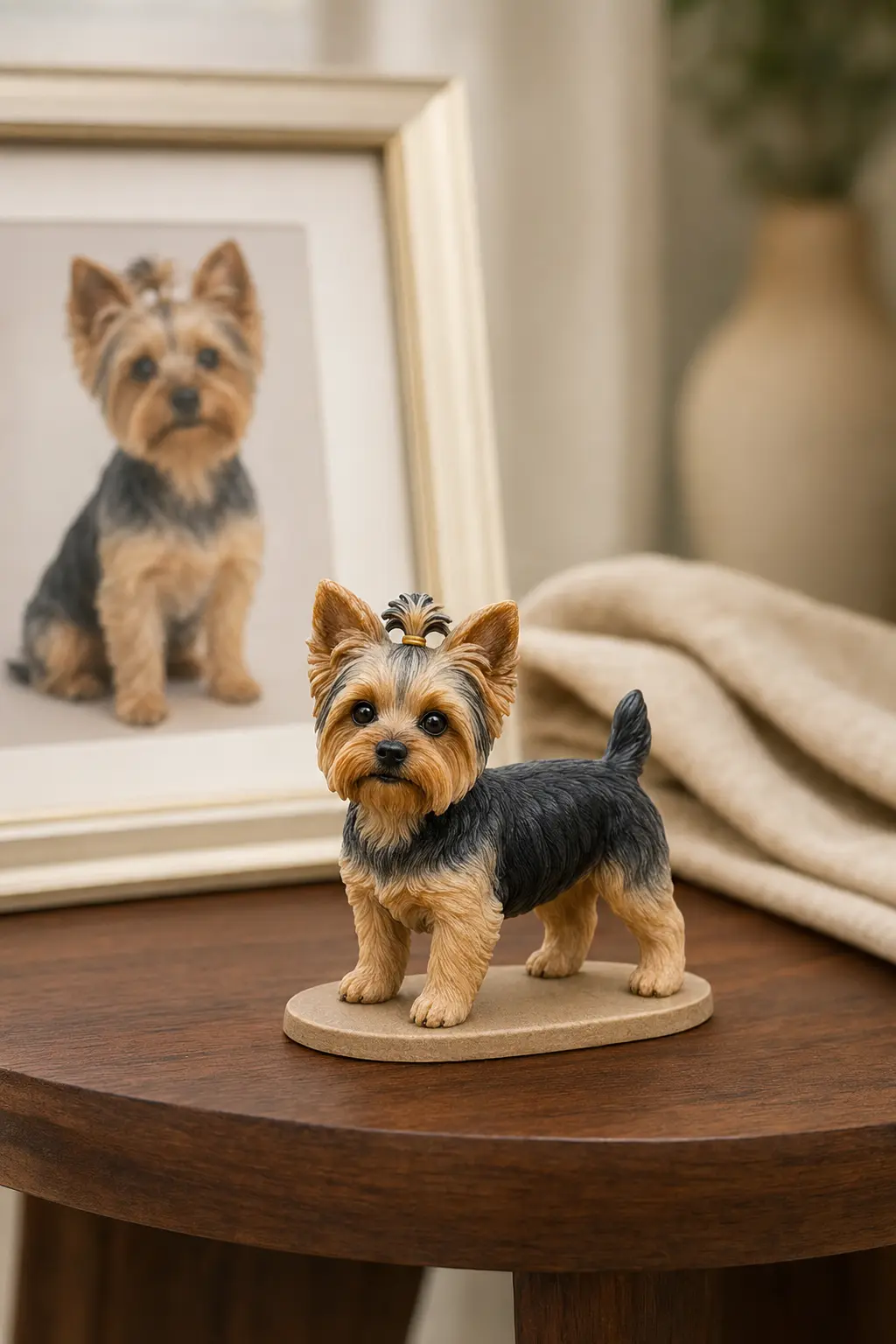
Capture the pose, coat pattern and personality that make your companion unmistakably yours.
The preview on screen is a digital representation, and the piece you receive will differ from it in colour, surface and small structural details. How a photo becomes a figurine →
Full-color resin, packed for transit as a decorative collectible. Keep it away from heat, moisture and impact; dust it with a dry soft cloth.
Production and quality review typically take 5–7 business days, and delivery a further 3–14 days after dispatch. Shipping & returns →
Made printable Whiskers, thin tail tips and fine fur edges are thickened or grouped into the silhouette, and a lifted paw is supported so the piece stands on its own.
For a custom pet figurine, coat markings, ear shape, stance and one unmistakable expression matter more than a formal studio photograph.
See more examples →A custom pet figurine is a made-to-order physical figure based on photos of a companion animal. InkMee interprets recognizable traits such as face shape, ear position, body proportions, coat colors, markings, stance and tail shape, then refines the selected direction into a printable full-color resin figurine.
Use a sharp, naturally lit image that clearly shows the eyes, muzzle, ears, body shape, legs, tail and important coat markings. A photo taken near the pet’s eye level is usually more useful than one taken from standing height because steep angles can distort the head, legs and body proportions.
One clear photo can define the main pose and visual direction. Additional references are helpful when markings continue around the body, one side of the face is hidden, the tail is not visible or the main photo does not show enough body shape.
Large recognizable markings, color blocks, facial patches and distinctive coat patterns can guide the design. Very fine fur, individual hairs, subtle ticking or tiny texture may be simplified at figurine scale. The aim is to preserve the pattern and visual cues that make the animal recognizable.
Yes. Choose a main reference that shows the version of the pet you want to preserve, whether that is a puppy or kitten, an adult pet or an older companion. Supporting photos can clarify markings and structure, but they should not unintentionally replace the age, coat or body condition defined by the main image.
The strongest cues vary by animal, but ear shape, muzzle and face proportions, coat markings, body build, stance, tail shape and one or two distinctive expressions or features often matter most. At figurine scale, these larger traits usually contribute more to recognition than individual strands of fur.
Recognizable accessories can contribute to the pet’s identity, but thin straps, dangling tags or unsupported elements may need to be thickened, attached, simplified or omitted for physical strength. The production version prioritizes a stable object while preserving the accessory’s overall visual role where practical.
Yes, when the available image still contains enough useful information. InkMee uses the visible references to make a conservative three-dimensional interpretation of hidden areas rather than treating unseen details as known facts. If a hidden marking, tail shape or other feature matters, an additional reference is the best way to reduce unnecessary guesswork.
It is the single biggest improvement you can make. A photo taken from standing height foreshortens the legs and the muzzle, so the figurine inherits proportions that look subtly wrong even when every marking is right.
Larger markings, yes — the patch over an eye, white socks, a saddle across the back. Fine ticking, brindle and individual hairs are interpreted rather than copied, because they fall below what the printing process can resolve.
Yes, and it is one of the most common reasons people order. Older or lower-quality photos are usually workable; tell us which details matter most, because that is what we protect when the reference is limited.