
Digital preview and final resin figurine
The preview on screen is a digital representation, and the piece you receive will differ from it in colour, surface and small structural details. How a photo becomes a figurine →
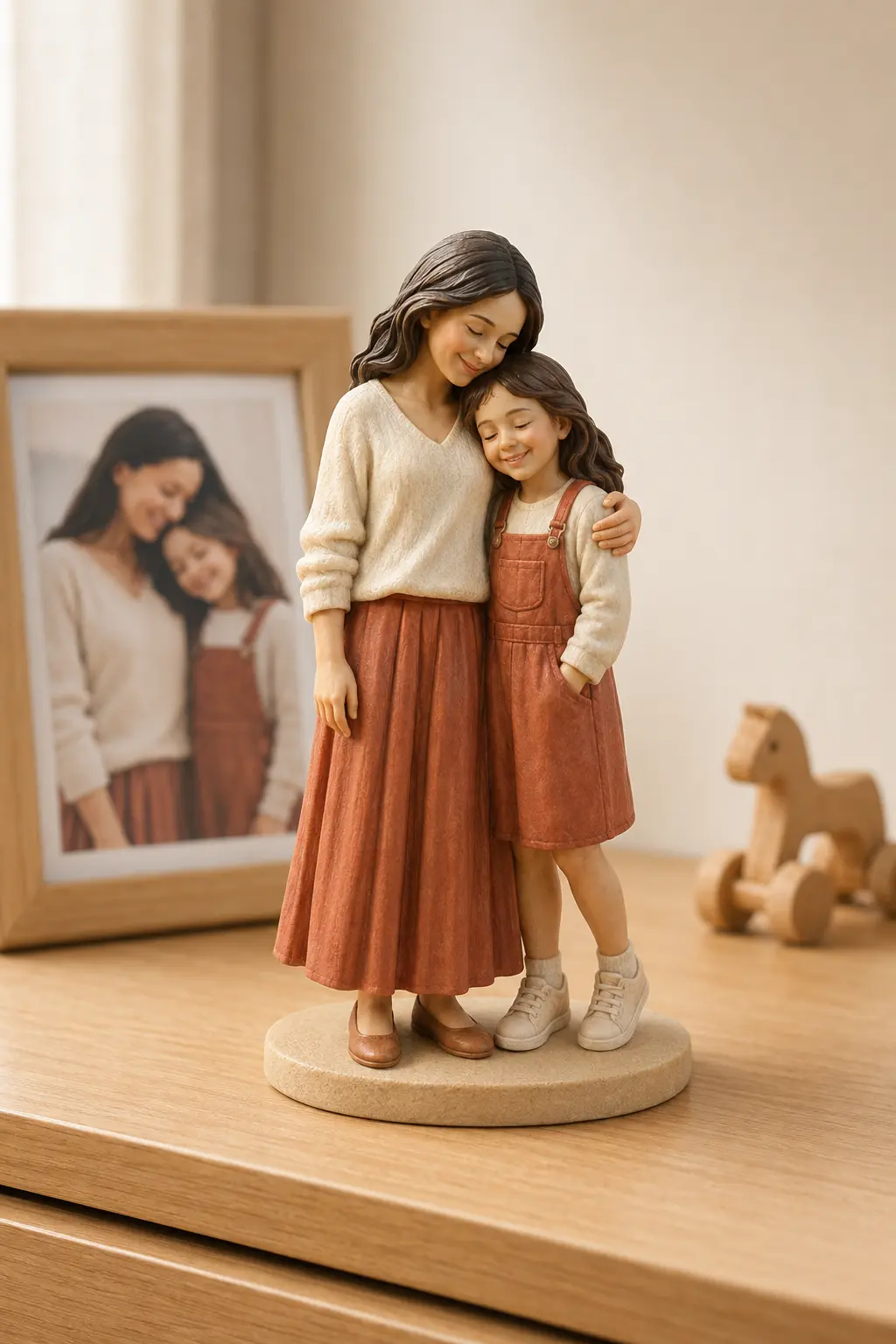
Preserve a close everyday moment between parent and child as one connected display composition.
The preview on screen is a digital representation, and the piece you receive will differ from it in colour, surface and small structural details. How a photo becomes a figurine →
Full-color resin, packed for transit as a decorative collectible. Keep it away from heat, moisture and impact; dust it with a dry soft cloth.
Production and quality review typically take 5–7 business days, and delivery a further 3–14 days after dispatch. Shipping & returns →
Made printable A carried child is fused to the adult at the points where they touch, and a small hand holding a larger one becomes one connected form, so neither can snap off.
Parent-and-child figurines preserve closeness through gesture and scale, making a thoughtful gift for birthdays, new parents and family milestones.
A custom parent-and-child figurine is a made-to-order physical composition based on one adult and one child shown together. The design focuses on their relative scale, clothing, faces and the gesture that connects them, such as holding hands, leaning together or being carried.
Choose a clear image where both faces are visible, the child is large enough in the frame to inspect, and the physical relationship between the two people is easy to understand. A full-body or three-quarter view is especially useful when height difference or a carried pose matters.
Yes. Relative scale is one of the defining features of this format. If the reference is old or the child’s age is not obvious, providing the age shown in the photo can help interpret the intended proportions. A supporting image can clarify scale when perspective is misleading.
A carried or closely connected pose can work because the contact between the figures can become part of the structural design. Hands, arms, clothing or other touching areas may be joined more firmly than they appear in the original photo so the composition behaves as one stable physical object.
Yes. The figurine should follow the age and version of the people shown in the chosen reference rather than automatically updating them to the present day. A newer supporting photo can clarify facial structure while the older main image continues to define the intended time period.
Yes. Supporting photos can clarify a face, hairstyle, clothing detail or hidden side of the body. They should support the main photo rather than replace its composition unless you deliberately select a different main reference.
Small fingers, thin gaps and fragile connections may be simplified, merged or thickened so the physical figurine remains strong enough to produce and handle. The production version prioritizes the recognizable gesture—such as holding hands or being carried—rather than copying every tiny separation exactly.
Not to a finished figurine. The composition is designed and produced as one physical object, so adding another child requires a new composition rather than modifying the completed piece. If the intended group includes more family members, choose the appropriate Family format or contact InkMee before ordering.
That difference is the point of this format, so it is preserved rather than evened out. It is also what fixes the piece to a particular year, which is why we ask for the child's age when the photo is not recent.
Yes, and it produces one of the sturdier compositions — the contact points are fused, so a carried child is structurally part of the adult rather than a separate piece balanced against them.
Not to a finished figurine. Each piece is printed as one object, so a second child means a new commission. If another is on the way, it is worth waiting or ordering a family format instead.