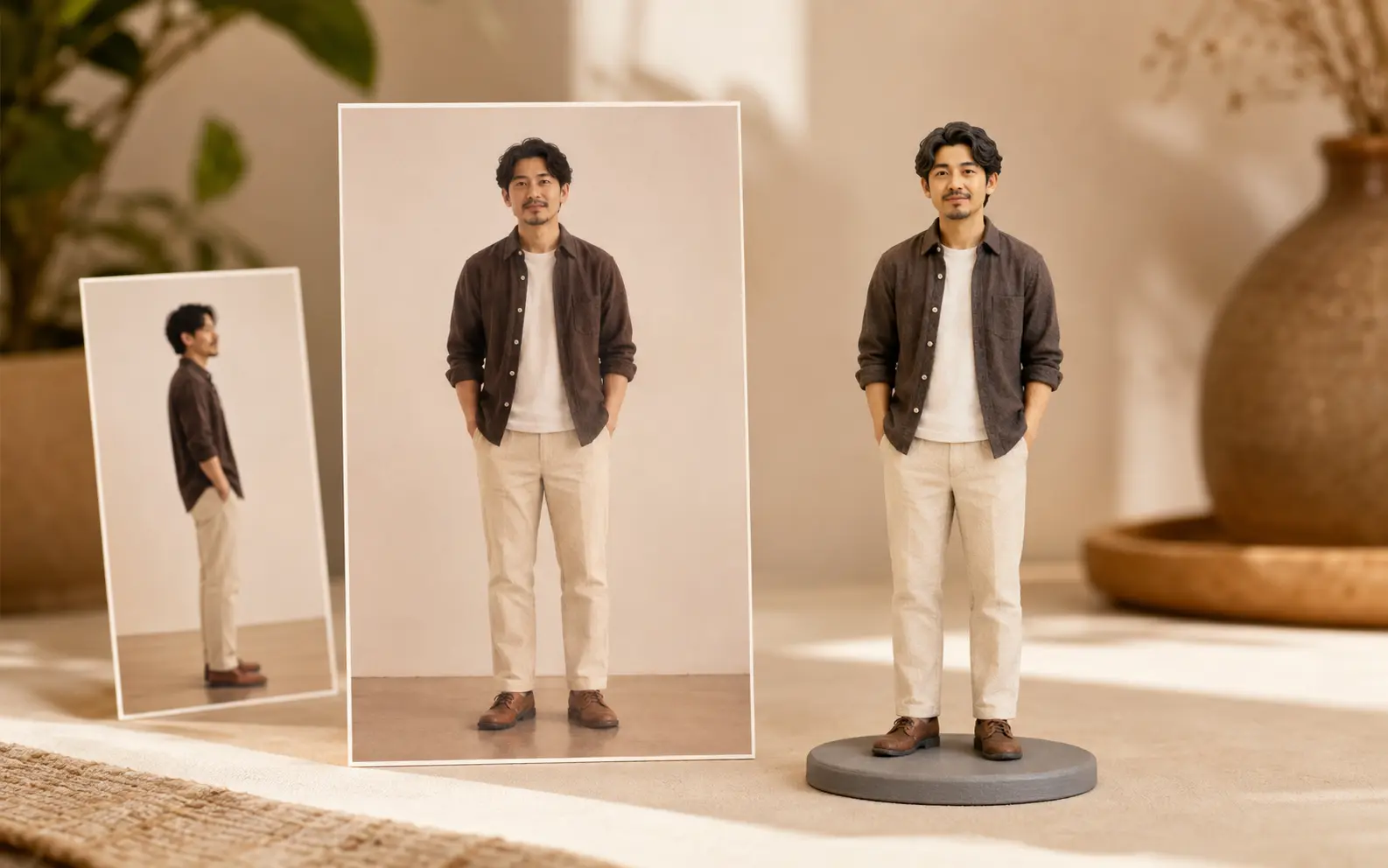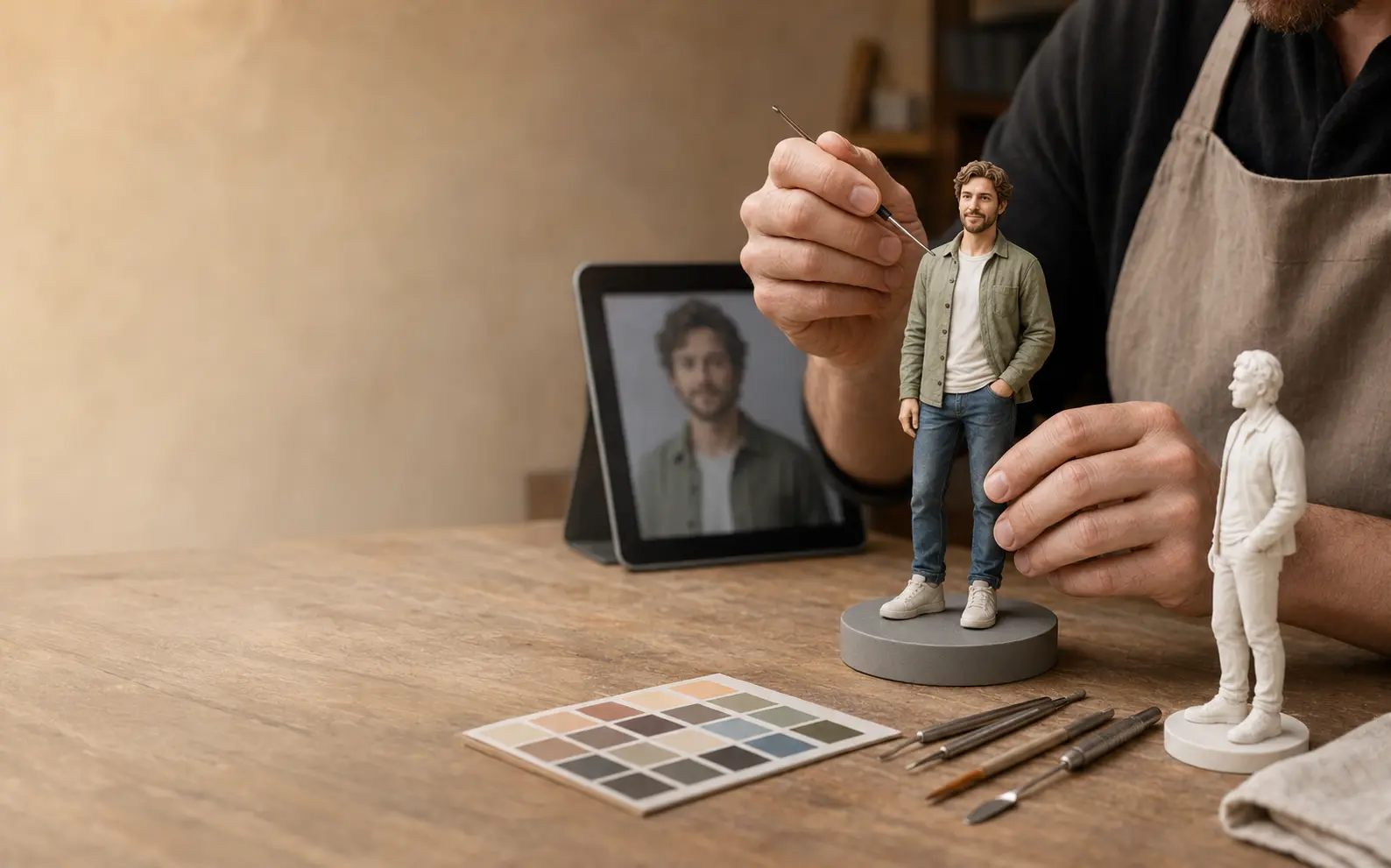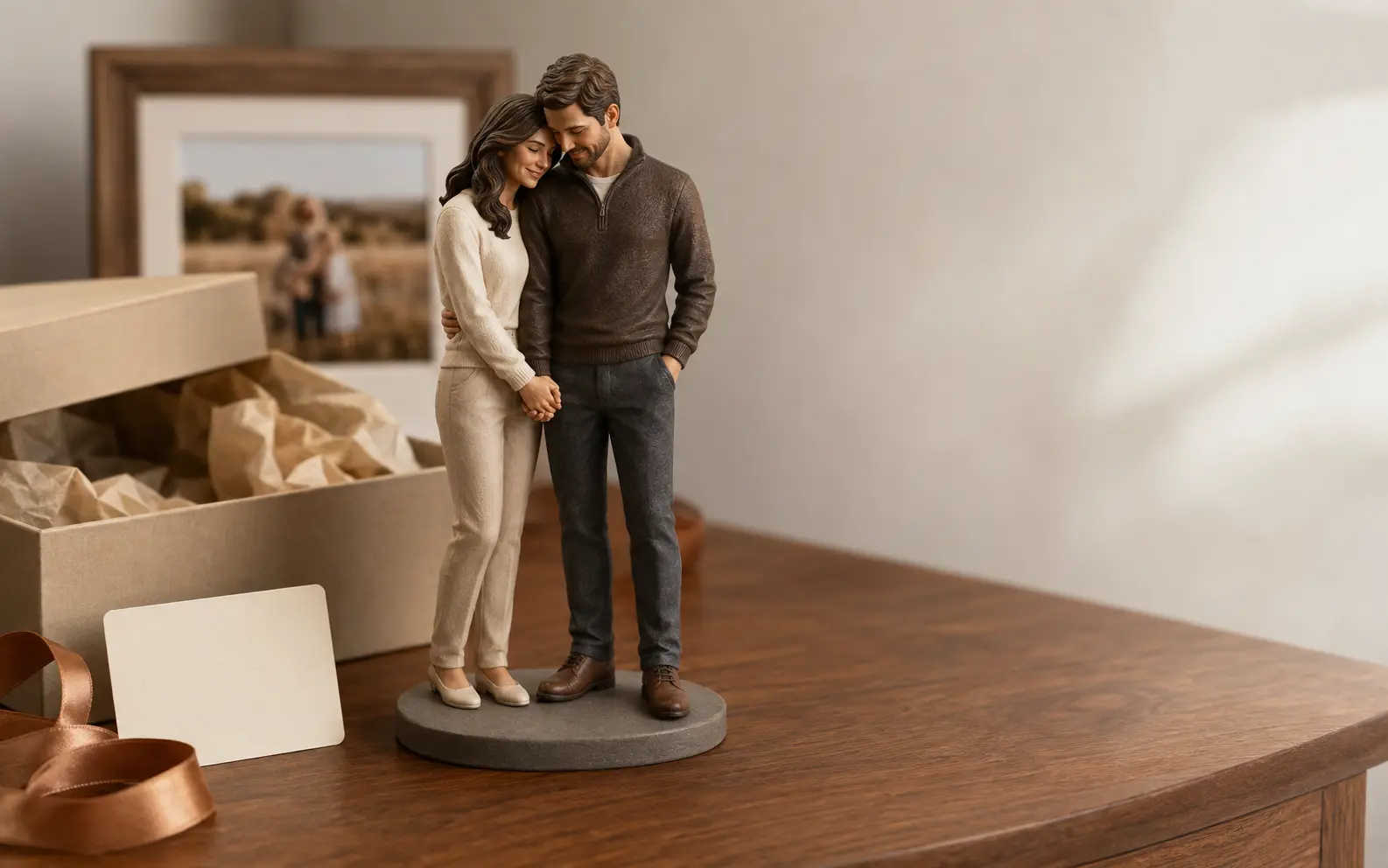
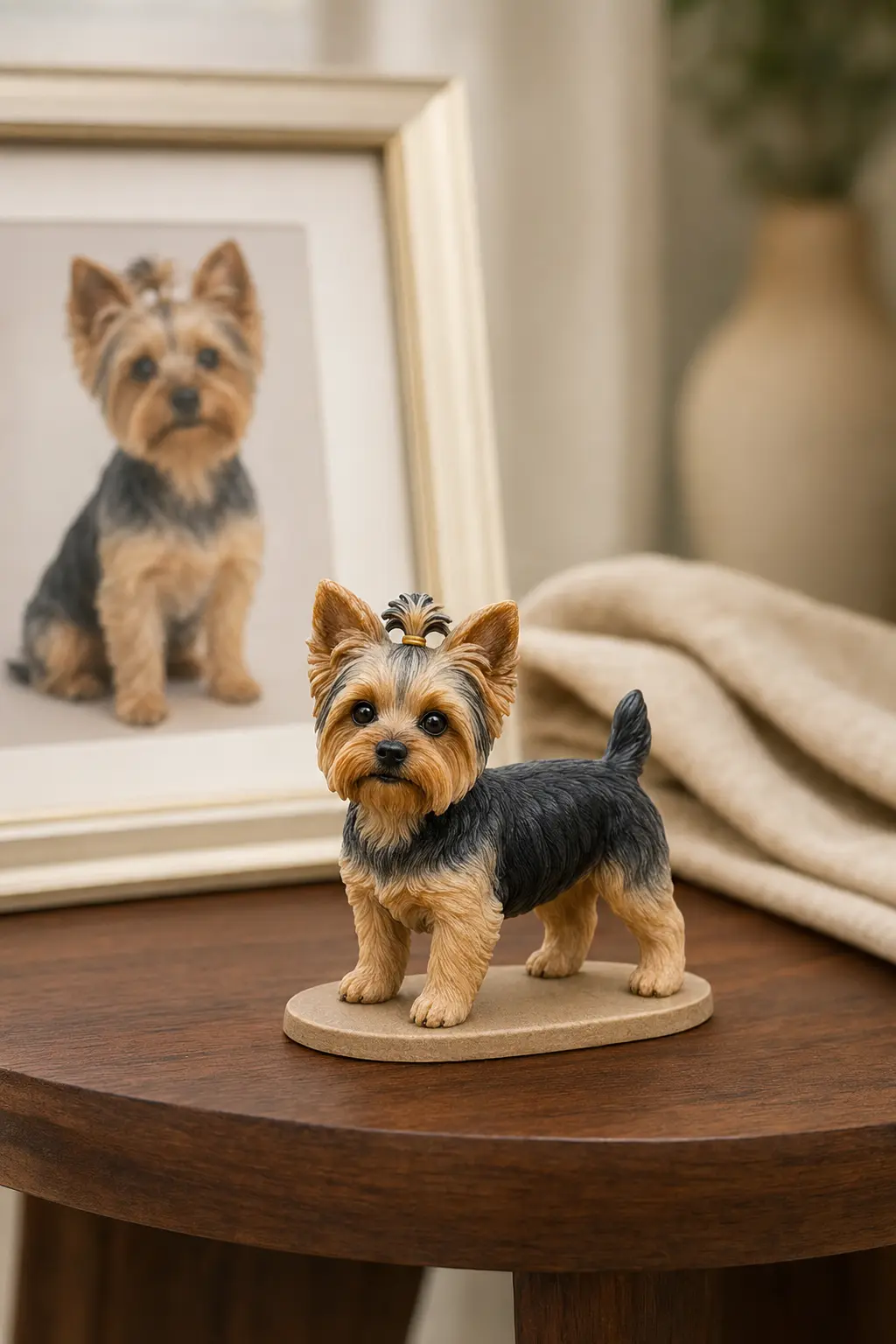
Pet likeness is carried by a handful of small asymmetries: one ear sits higher, a patch crosses only one eye, the tail curves in a familiar direction, the body leans forward with endless curiosity. Get those right and the piece is unmistakably your animal. Get them generically right and you have a very nice figurine of a dog.
Breed shape is the easy half
Any competent process can produce a recognizable beagle. What it cannot do without help is produce your beagle — the one whose left ear folds differently, who stands with the weight slightly back, whose white blaze stops short of the nose.
This is the difference between a figurine that is correct and one that is familiar, and it is decided almost entirely by what your reference photo happens to show and what you take thirty seconds to tell us.
Shoot from their eye level, not yours
This is the single change that improves a pet reference most, and almost nobody does it. A photo taken from standing height looks down at the animal, which foreshortens the legs, enlarges the head and shortens the muzzle.
The figurine then inherits those proportions. Every marking can be perfectly placed and the piece will still look subtly like a different animal, because the underlying shape came from a distorted view. Kneel, or put the phone on the floor.
Show the markings in neutral light
Indoor bulbs and filters shift coat colour more than people realise — a warm lamp turns a cool grey coat brown, and the correction happens in the print, not on your screen. Daylight, or open shade, shows where colours actually begin and end.
Markings also need to be visible on more than one plane. A dog photographed only from the side gives no information about the chest, which is where many breeds carry their most distinctive white. If the side and the front differ, a second photo of the front is worth more than a better photo of the side.
- Both ears visible and in their natural position
- Eyes unobstructed by shadow
- Chest and paw markings included
- Collar or favourite accessory shown clearly
Personality lives in posture
A formal sitting photo is useful for reference but is rarely the pose people actually want. The stance that feels like your animal is usually the one they choose themselves: the head tilt, the sploot, the proud upright watch over the garden.
Choose that as the main photo even if it is technically the worse picture. Composition can be corrected; character cannot be invented. If the characteristic pose is a blurry action shot, send it alongside a sharper one and tell us which is which.
What happens to fur at eight centimetres
Individual hairs do not exist at this scale — they fall well below what the process can resolve, and anything thin enough to look like fur would be too fragile to survive being picked up. Coats are therefore built as shaped masses, with the texture implied by the form rather than modelled strand by strand.
Long-haired breeds are affected most. A collie's ruff or a spaniel's ear feathering becomes a defined volume with a clear edge instead of a soft cloud. Read the preview with that in mind: the goal is a coat that reads correctly from across the room, which is where the piece will actually be seen.
Memorial pieces, and the photos you have
A large share of pet commissions are for animals who have died, and those requests arrive with whatever photographs exist rather than the ones we would ask for. Old phone pictures, a single snapshot, nothing at eye level.
That is workable, and it changes what matters. When the reference is limited, the description does the work the image cannot: which ear was the crooked one, how they stood, whether the grey around the muzzle should be there. Tell us what the family always noticed, and that becomes what the piece protects.
A meaningful result begins with a clear intention.
Choose the subject, moment and recognizable details you want the physical piece to carry. InkMee can help translate that direction into a full-color figurine designed for real-world display.