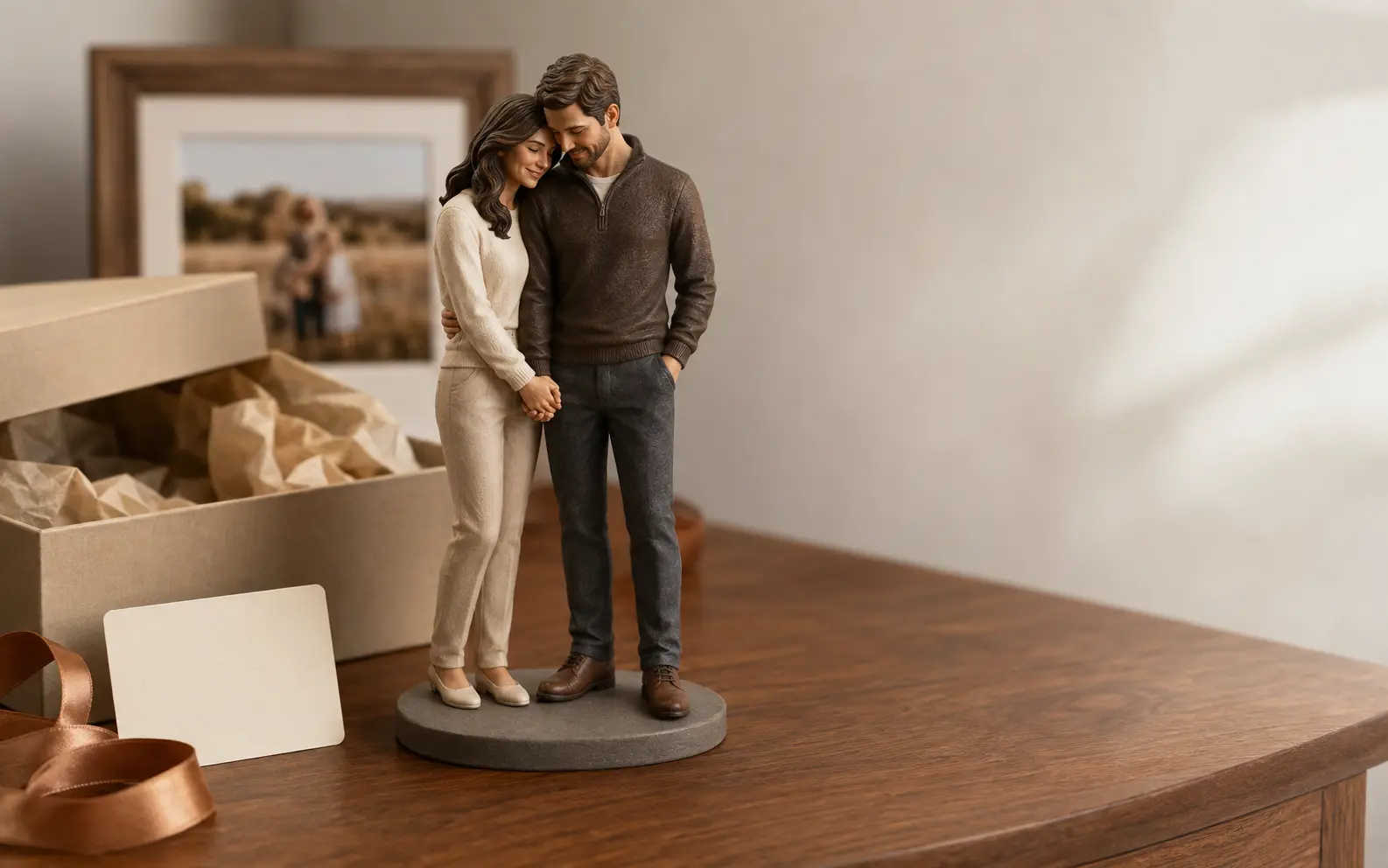
Most personalisation is a name printed on something that existed already. It is pleasant and it is forgettable, because the object would be identical for anyone else with the same name. A gift feels personal when it could only have been made for one person — which is a question about what you choose to depict, not about how much of it you customise.
Choose the moment, not the person
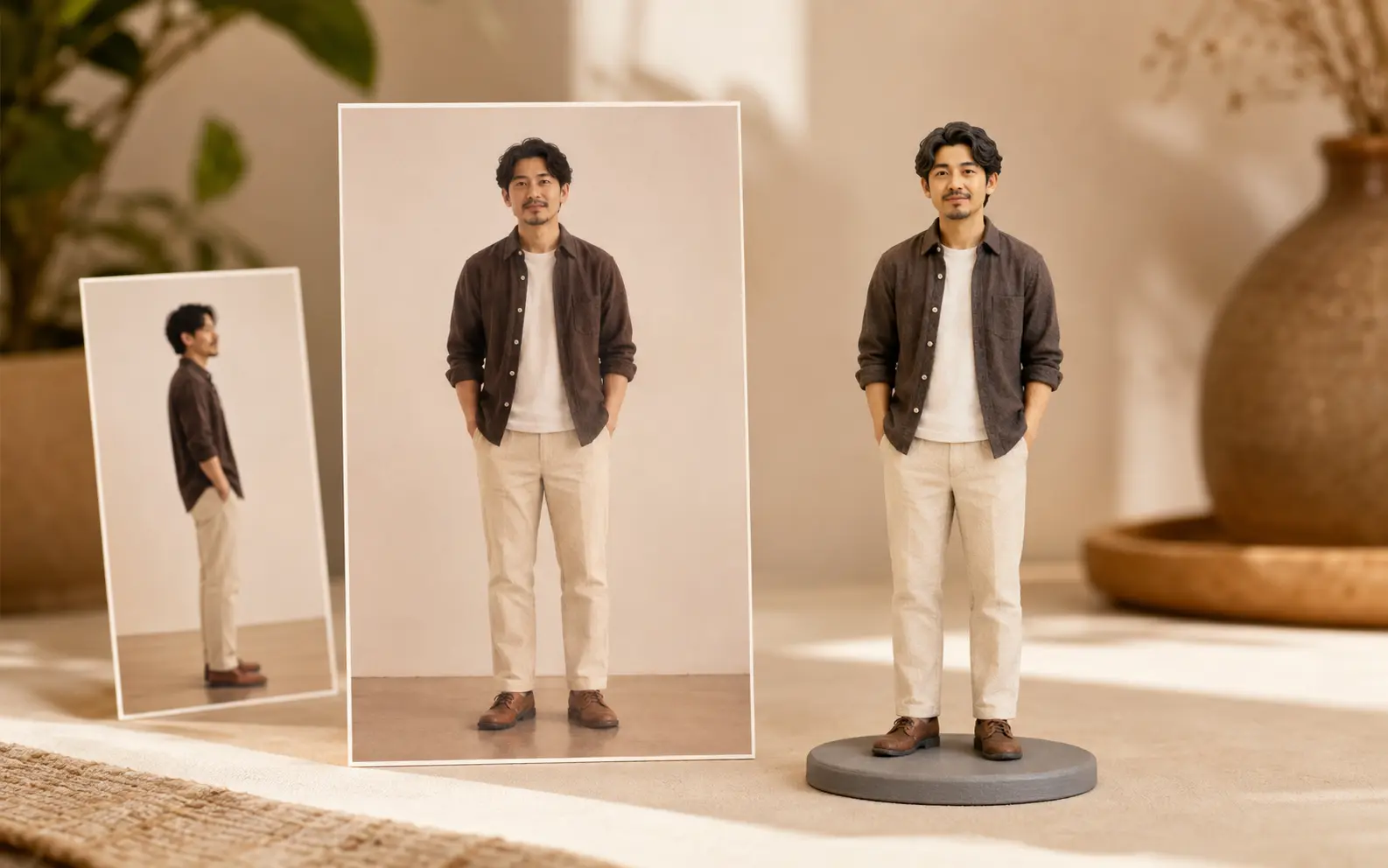
The instinct is to pick the best photograph of someone. The stronger instinct is to pick the moment you both remember, and accept whatever photograph came out of it.
A slightly awkward picture from a specific afternoon carries more than a flattering portrait from no particular day, because the first one is about something that happened and the second is about how someone looks. The recipient recognises the difference immediately.
Look for the detail nobody else would include
Every close relationship accumulates small specifics: a coat worn for a decade, a way of standing, a dog who insisted on being in every photo, a hat that became a joke. These are what make a gift unmistakably from you.
They are also easy to lose, because they look like flaws when you are choosing a photo. The scruffy jacket is the point. Say so when you order rather than hoping it survives on its own.
- A shared chapter rather than a milestone in the abstract
- Clothing or an object with a story attached
- A pose or gesture the person actually does
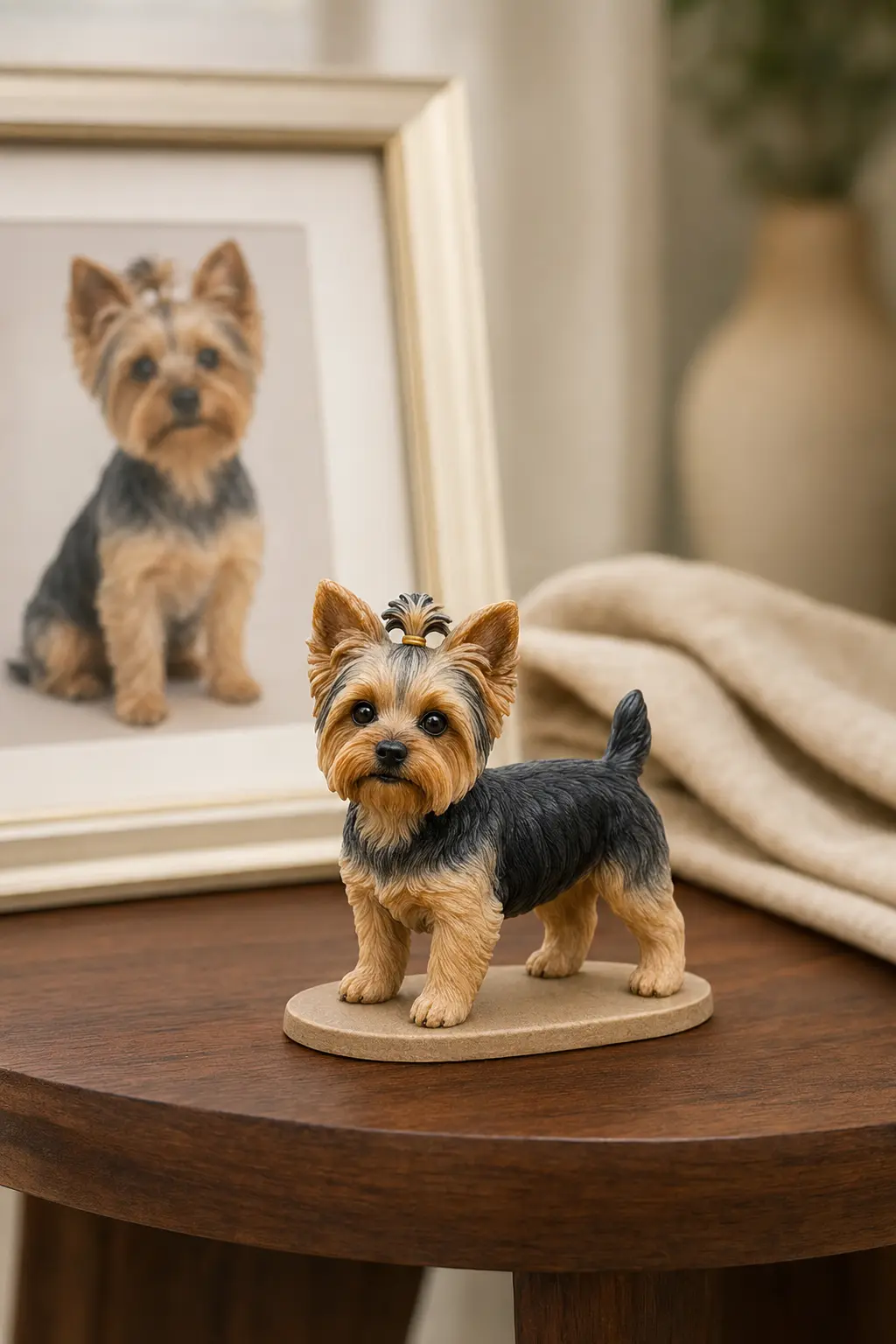
- Anyone else who belongs in the moment, including pets
Plan backwards from the date
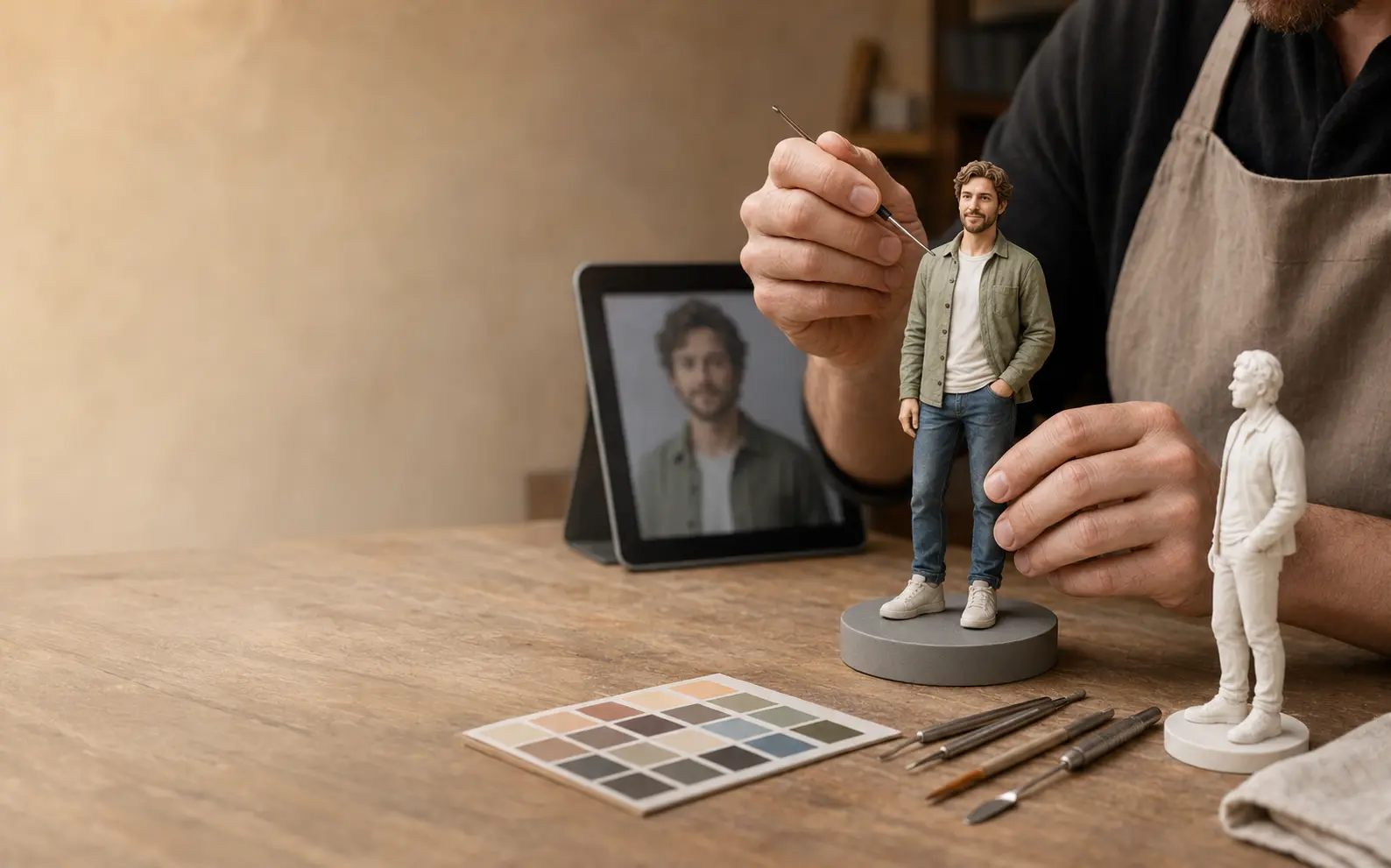
Custom work is made after you order, not picked from a shelf, and that changes the arithmetic of gift-giving. Production and quality review take a few business days, and delivery takes longer again depending on destination and customs.
Work backwards from the occasion and add slack for the parts nobody controls — a customs hold, a public holiday, a reference photo that turns out to need replacing. If the date is fixed, contact us before ordering rather than after; a date is only guaranteed when it has been confirmed in writing.
When several people are giving one gift
Group gifts tend to converge on the safest option, because a committee optimises for nobody objecting. The result is usually the generic thing everyone would have rejected individually.
A better process is for one person to choose the moment and the photo, and for everyone else to contribute rather than vote. If the group itself is the point — a team, a friendship, a family — then the group belongs in the piece, and a multi-figure format does that directly.
When you cannot get a good photo of the recipient
Surprise gifts have an obvious problem: asking for a photo gives away the surprise. In practice most people already have what they need, because the photographs that work are the candid ones rather than the posed ones.
Look through shared albums, group chats and older phones rather than trying to engineer a new picture. If the best available image is imperfect, that is usually workable — tell us what it does not show and we will work from your description for the rest.
What happens after the unwrapping
The test of a keepsake is not the reaction in the room; it is whether the object is still out on a shelf two years later. Most personalised gifts fail that test, because they were designed to be opened rather than to be lived with.
Physical presence is what changes the odds — something with weight and a footprint, that has to be given a place. Choose a size that suits the place you imagine it living, and a subject the person would be happy to explain to a visitor. That is the whole difference between a present and a keepsake.
A meaningful result begins with a clear intention.
Choose the subject, moment and recognizable details you want the physical piece to carry. InkMee can help translate that direction into a full-color figurine designed for real-world display.