The average phone holds several thousand photographs. Almost none of them are ever looked at again on purpose. They are not lost, exactly — they are archived, which turns out to be a different thing from being kept.
An archive is not a memory
Photographing something has become so frictionless that it has partly replaced remembering it. The picture is taken, the moment is filed, and the filing feels like it settled the matter.
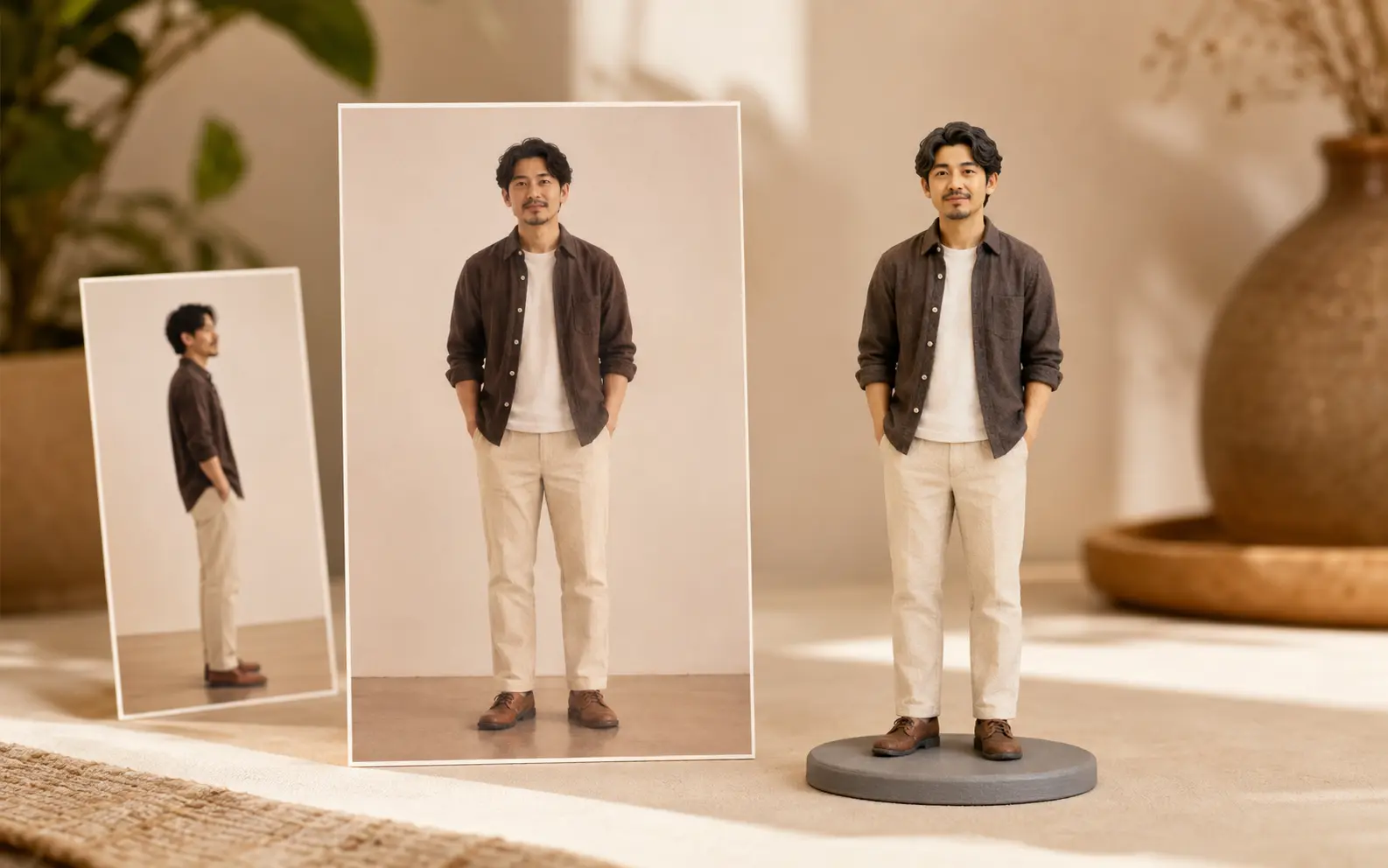
But an archive only works when someone searches it, and nobody searches their own camera roll for a Tuesday in 2019. The photographs that stay with people are the handful that escaped the archive — printed, framed, set on a shelf, made into something with edges.
Objects get looked at; files get scrolled past
A physical object occupies space, and space has to be justified. That is precisely why it works: something on a shelf is seen every day without anyone deciding to see it, while a file is only seen when it is sought out.
This is also why physical keepsakes tend to be about relationships rather than achievements. The things people give shelf space to are usually the things they want to be reminded of unprompted.
Choosing across years, not across the week
When people pick a photo to turn into an object they usually reach for a recent one, because it is the one they can find. Recent is rarely the strongest choice.
The photographs that hold up are the ones that mark a transition: the last year in an old flat, the first months with a dog, the summer before someone moved away. You cannot always see the significance at the time, which is why scrolling back a few years is worth the effort.
What people actually display
Look at the objects in anyone's home that have survived several moves, and they follow a pattern. They are small. They involve people or animals rather than places. They usually have a story that takes about one sentence to tell.
Landscapes, buildings and beautiful abstractions rarely make the cut, however good the photograph was. What earns permanent space is the specific and the relational — a particular pair of people, a particular animal, at a particular point in their lives.
- Small enough to have an obvious place
- About people or animals, not scenery
- Tied to a chapter rather than a date
- Explainable in one sentence to a visitor
The photographs that arrive after a loss
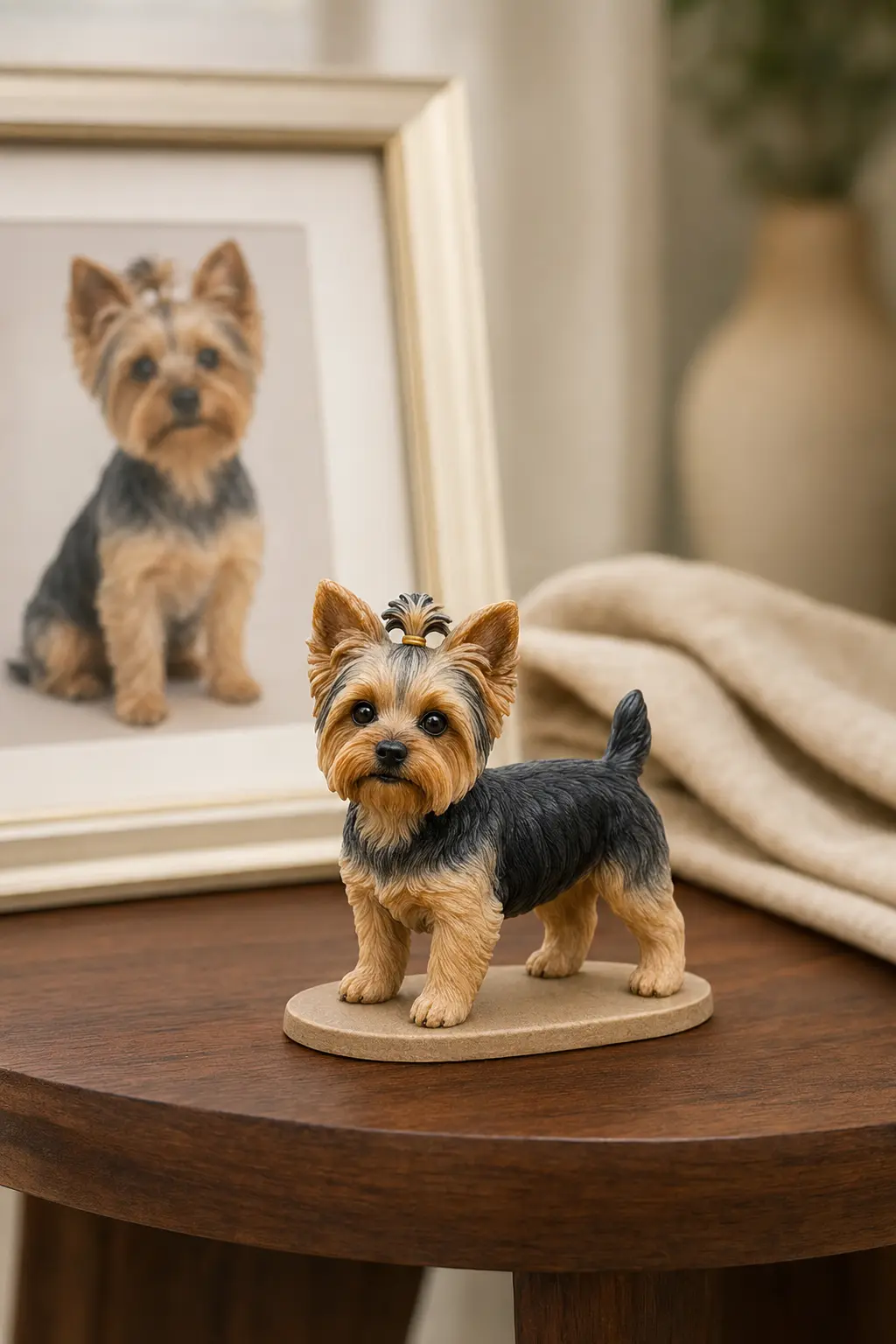
A significant share of what we make comes from people who have lost someone, or lost a pet, and are working with whatever images exist. Those requests almost never come with an ideal reference — they come with the photo that happened to be taken.
That is the right starting point, and it should not be traded away for a technically better picture of a different moment. When the reference is limited, what fills the gap is description: how they stood, what they always wore, which detail the family would notice first. We would rather build from the photo that matters and your account of it than from a sharper photo that means less.
One photograph, given weight
There is no shortage of images. There is a shortage of images that anyone will encounter again without going looking for them.
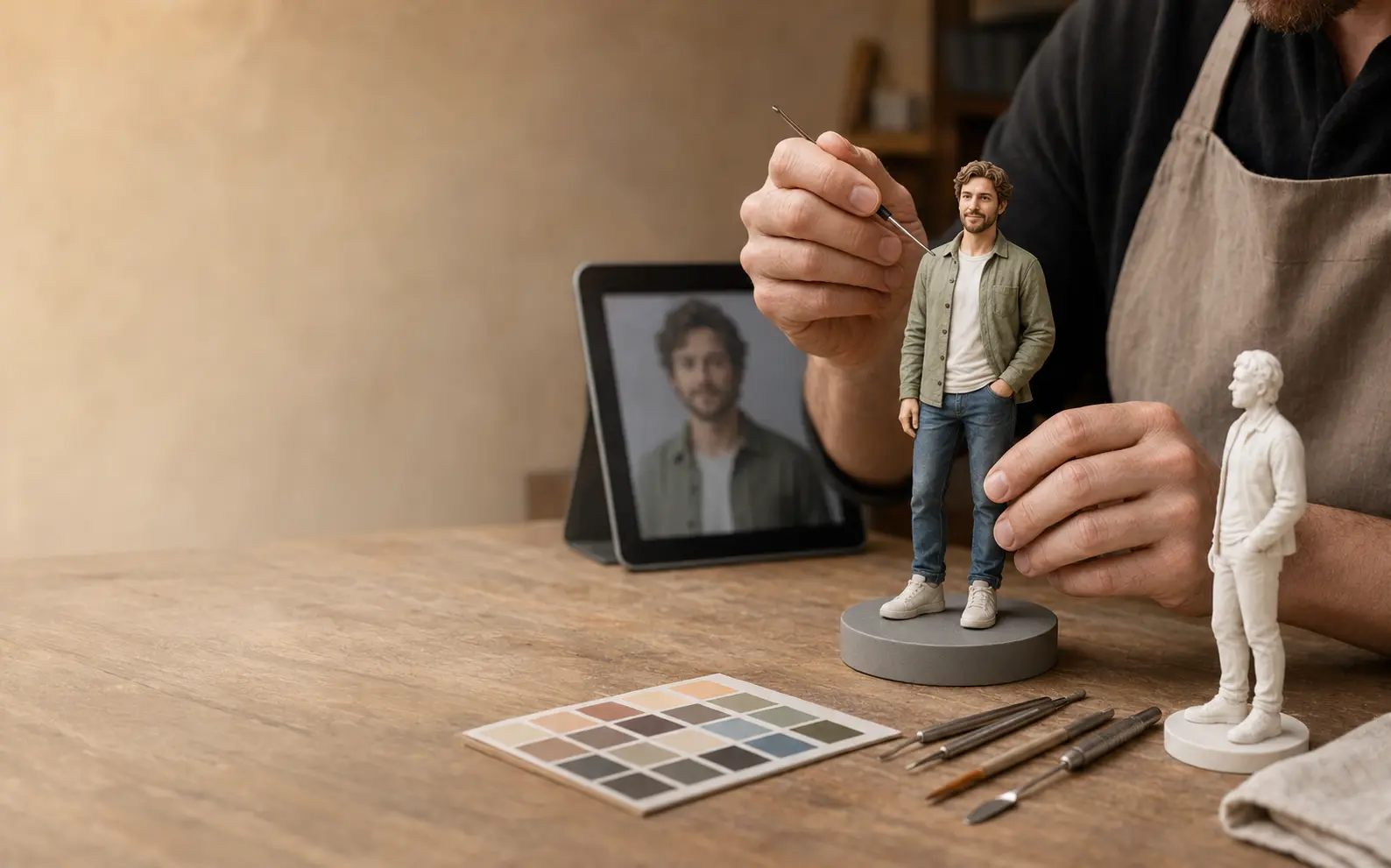
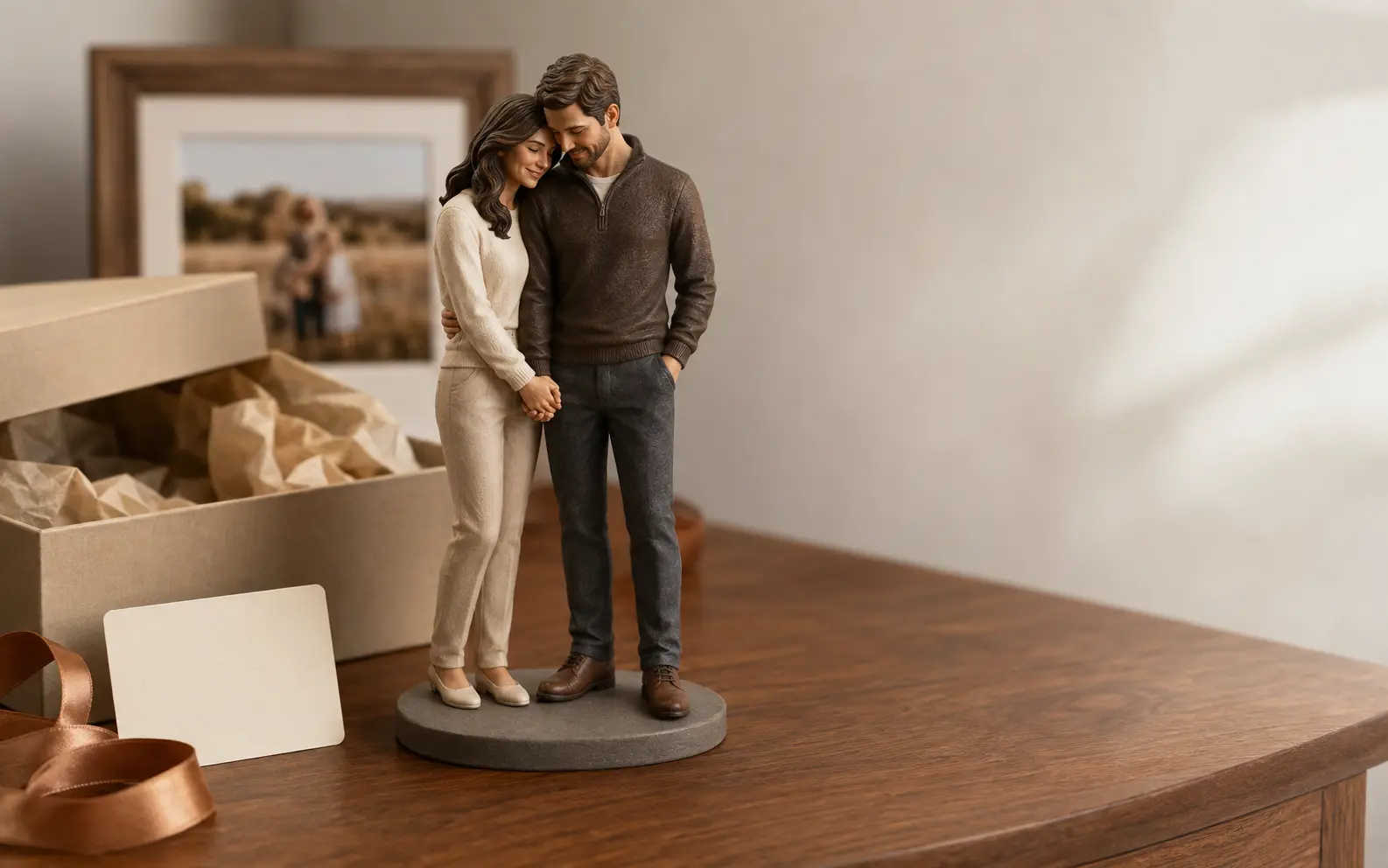
Choosing one and giving it physical form is a small act of editing against an archive that never stops growing — a decision that this particular afternoon, out of several thousand, is the one that gets to stay in the room.
A meaningful result begins with a clear intention.
Choose the subject, moment and recognizable details you want the physical piece to carry. InkMee can help translate that direction into a full-color figurine designed for real-world display.